GREAT DOG! (AS SEEN BY THE RIVER) (2026)
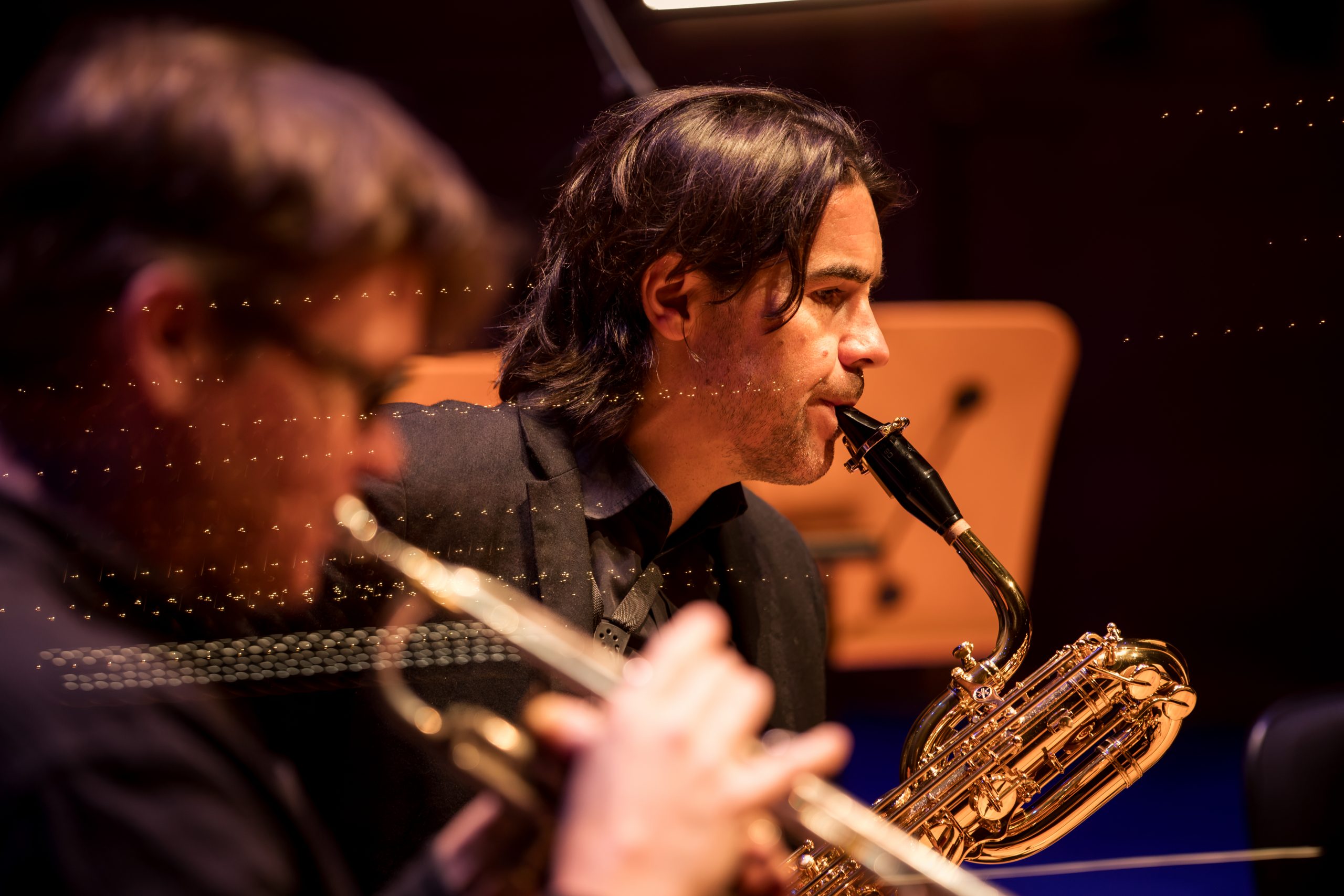
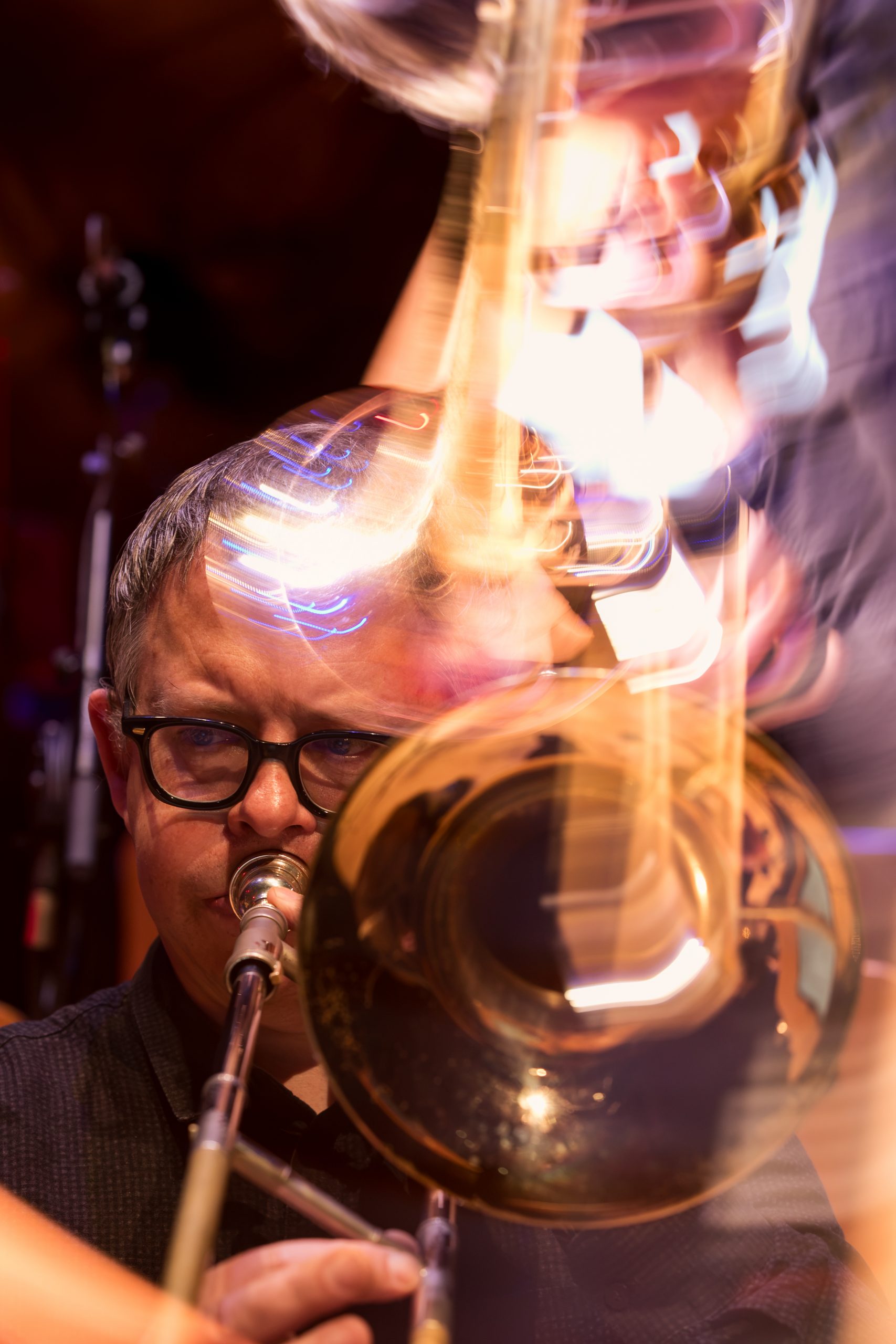
For bass flute (with B foot), trumpet in C, trombone, baritone saxophone, and double bass.
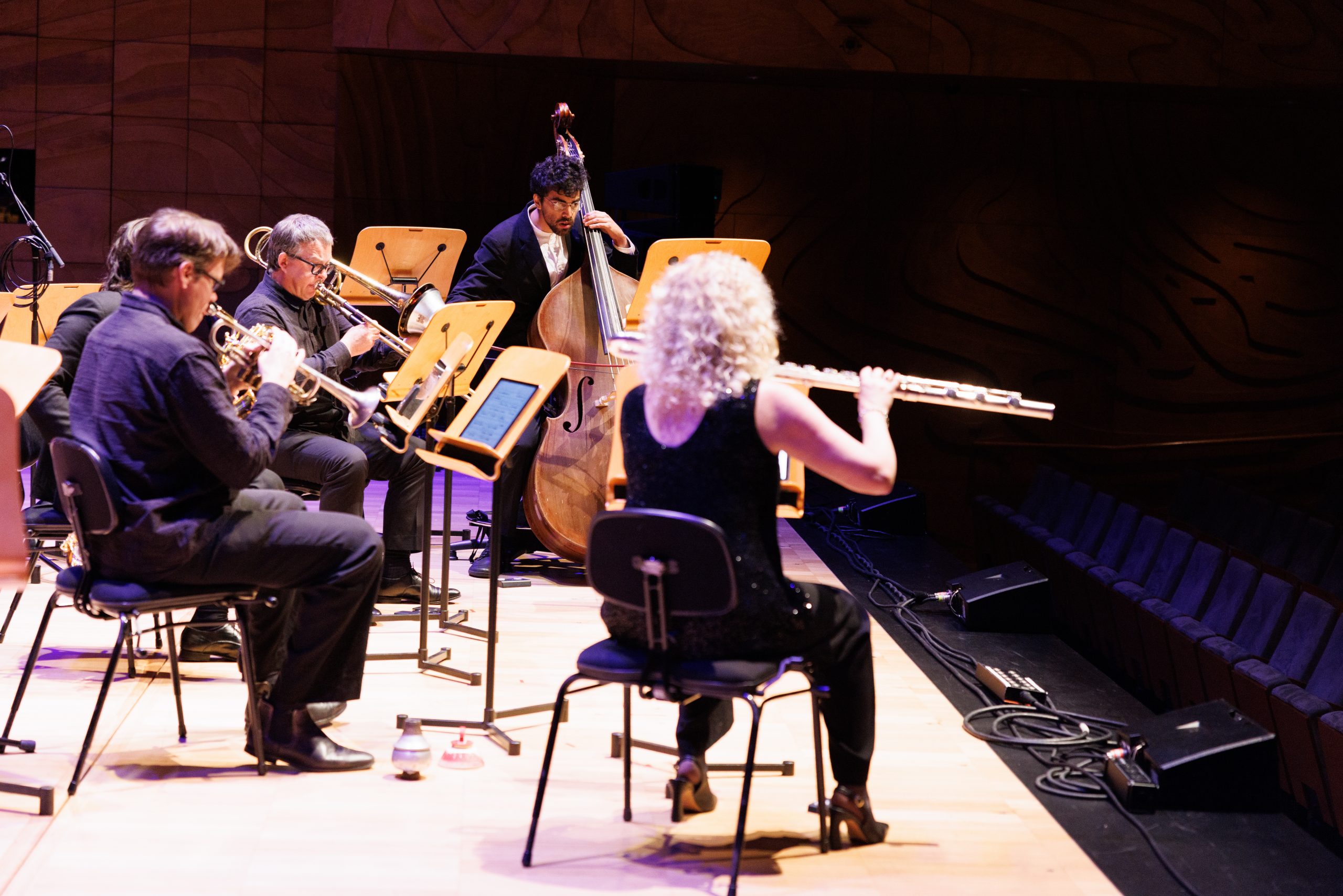
Written for the ELISION Ensemble in their 40th birthday year.
World premiere: 16th April, 2026. Klangbrücken Festival, Hannover (DE).
Australian premiere: 16th July, 2026, Melbourne Recital Centre (AU).
Austrian premiere: 5th November, 2026. Wien Modern (AT).
Full duration: 6 minutes.
Great Dog! (as seen by the River) contributes to a series of recent works of mine that seek to understand the inscriptive potential of water for music notation and performance. What fluid logics emerge when we learn to read water?
This piece specifically grew from an initial inquiry: What if I were to hand over semiotic agency to the River? Riverine modes of inscription and representation are never fixed, rather emergent—constantly flowing beyond temporal frontiers. What does this mean, then, for notation, the apparent immutability of which we tend to trust?
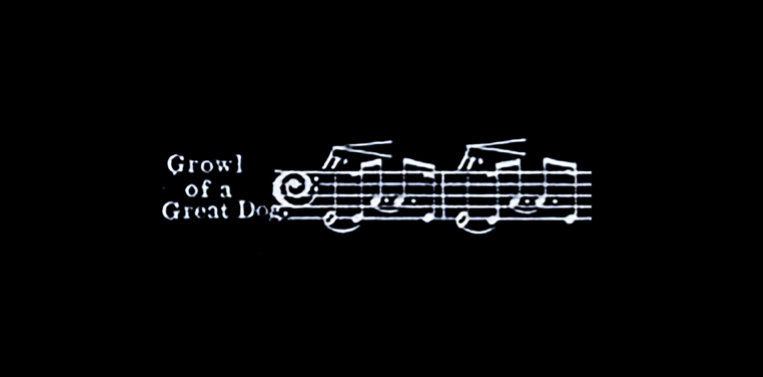
My questioning took me back in time to 1832, the year of publication for The Music of Nature by the Englishman William Gardiner. This text is an early Victorian attempt to transcribe—capture—the sonic diversity of the natural world in music notation. It reflects a pre-Darwinian, taxonomic understanding of the non-human. Thus emerges the figure of the Great Dog, reduced by Gardiner to the motif above.
Attempting to free the Great Dog from their inky confines, I reflected this notation in water, and caught the River’s infinitely generative response with slow motion videography. This is (a fragment of) how the River sees the Great Dog:

Then, in the spirit of eternal renewal and ever-flowing representation, I transcribed these River-graphics back into Western notation. This piece speaks to multitudinous, more-than-human ways of representing the world, divergent semiotics that are networked and therefore always partial, and realities that are mediated and re-mediated in endless circles. It is my hope that this piece is not an endpoint, rather a brief confluence in the becoming of the Great Dog.
This creative research was funded by the Australian Research Council Laureate Project Resonant Earth: Music, Ecology, and Climate Justice directed by Prof. Liza Lim, Sydney Conservatorium of Music, University of Sydney. The work was developed on Gadigal and Wurundjeri Lands (Sydney and Melbourne) throughout 2025 and 2026.