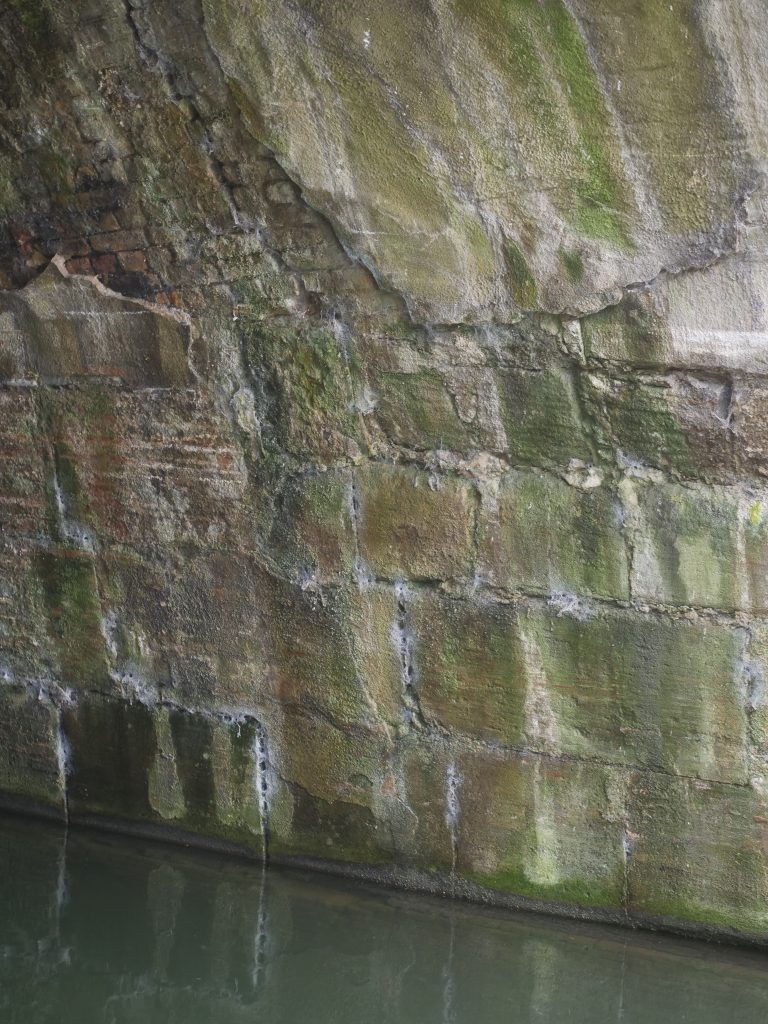
KEYSTONES (music at the edge of rupture) (2026)
For flute, tenor saxophone, bass clarinet, percussion, voice (bass-baritone), violin, viola, cello, and electronics.
Commissioned by Standard Issue with support from the Hinrichsen Foundation.
Written for the 50th anniversary of the Spitalfields Music Festival.
World premiere: 4th July, 2026, Spitalfields Music Festival, London (UK).
Full duration: 9 minutes.
The creative research was funded by the Australian Research Council Laureate Project Resonant Earth: Music, Ecology, and Climate Justice directed by Prof. Liza Lim, Sydney Conservatorium of Music. The work was also supported by The University of Sydney through the Albert Travelling Scholarship.
Recorded by BBC Radio 3, produced by Iain Chambers. www.bbc.co.uk/programmes/m00040cx
Moving into dark interiors confounds senses that have been attuned to an ever-illuminated world. – Tim Edensor
Keystones (music at the edge of rupture) is a site-responsive work for the Islington Tunnel, a cavernous, subterranean stretch of the Regent’s Canal. This music speculates on multispecies worlds within the Tunnel, with particular attention to the bat population* that relies on the Canal as a dark corridor. The bats’ ultrasound and the Tunnel’s infrasound are creative registers beyond our human scales of perception. What transforms within us when we attune to more-than-human frequencies?
The term keystone refers to both the apex of an arch, and to a species with major ecological importance within its environment, such as the bats within the Canal ecology. If either should rupture, the respective infrastructural and ecological systems would collapse. At present, both the heritage-listed Tunnel arches and the bat population are at risk.
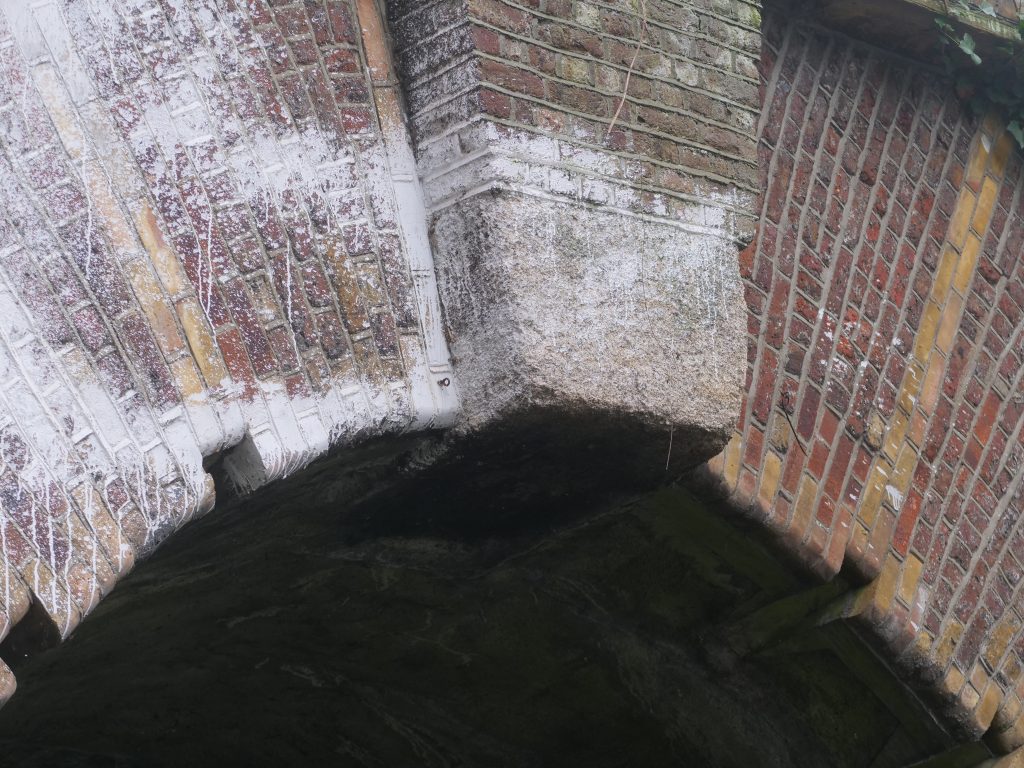

In preparation for this premiere, the composer and members of Standard Issue completed fieldwork at the Islington Tunnel in consultation with the Canal and River Trust. Sincere thanks to Ben Macmillan (ecologist) and Phil Emery (heritage advisor).
* Species include common and soprano pipistrelles, and Daubenton’s ‘water’ bat. It is imperative that dark corridors are maintained along the Canal for ecological health. Audience members are encouraged to seek out and protect this darkness—if not for the bats, then for the potential for our own transformation within these dark spaces in times of ecological crisis.